

How to Proofread a Research Paper in Three Passes
Most students and early-career researchers do not actually have a proofreading problem. What they have is an undifferentiated revision problem: one enormous, vague pass over a manuscript that tries to fix argument struct

How to Recover the Reason Behind an Old Revision
Enterprise research teams rarely lose a document. They lose the decision trail behind it. A client deck says one thing in version four and something else in version seven. A decision memo changes a recommendation without

How to Triage a Research Backlog Before the New Year
A research backlog becomes unmanageable when every saved paper, half-finished search, and unresolved thread carries equal apparent urgency. Triage is the discipline of assigning each item a disposition based on what it c

How to Turn Weekly Reading Notes into a Monthly Synthesis
You have a stack of notes from the last four or five weeks. They cover different papers, some digressions, and a few half-formed questions. The problem is not the notes themselves—it is that they do not yet form an argum

How to Write a Cover Letter for a Journal Submission
A journal cover letter is not a summary of your paper. Editors read it before the manuscript to answer one question: should this submission be sent to review, and does the author understand the journal's readers? The let

How to Write a Data Availability Statement That Reviewers Accept
A data availability statement tells a reader where the data behind your results lives and under what conditions it can be accessed. Journals ask for it because a result that cannot be traced to its underlying material is

Journal Scope vs. Journal Impact Factor: Which Should Guide Submission?
If you are staring at a finished thesis chapter or first manuscript and trying to decide where it belongs, the same question tends to surface in every supervision meeting and late-night search: should the journal's scope
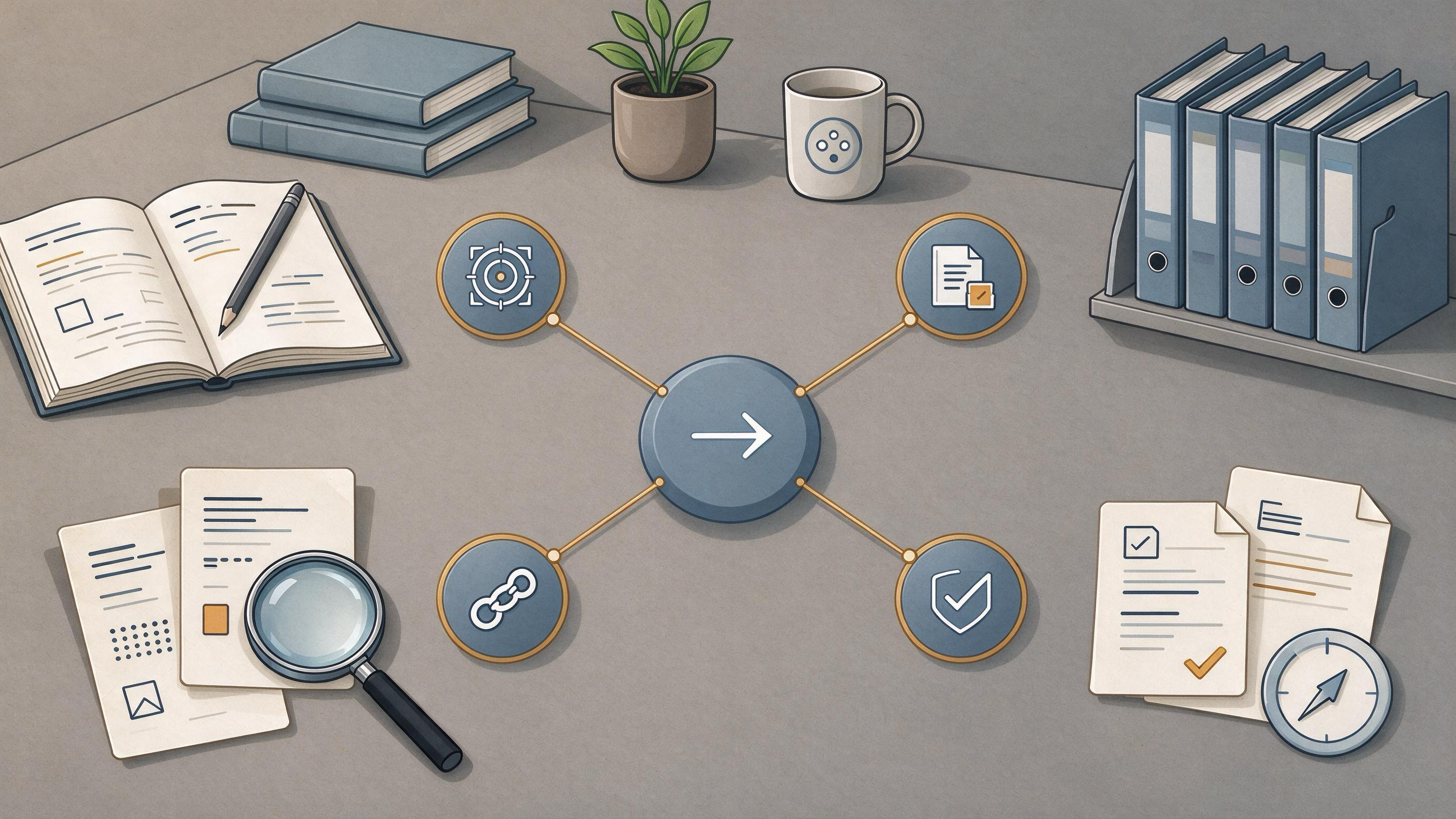
Journal Selection Workflow: Scope, Evidence, and Submission Fit
Choosing a journal is rarely a single decision. It is a workflow that runs in parallel with manuscript revision, literature scoping, and evidence organization. A practical selection process asks three connected questions

Line Editing vs. Copyediting for a Research Paper
You have a finished draft, a supervisor's comments, and a submission deadline. The question is not whether to edit the paper—it is which kind of edit comes first and what each pass should actually change. Line editing an

Manuscript Submission Checklist: From Final Draft to Upload
You have a final draft. The next question is not “is my writing good?” but “what still sits between this document and a journal’s upload button?” That gap is concrete and checkable: format, reporting completeness, materi