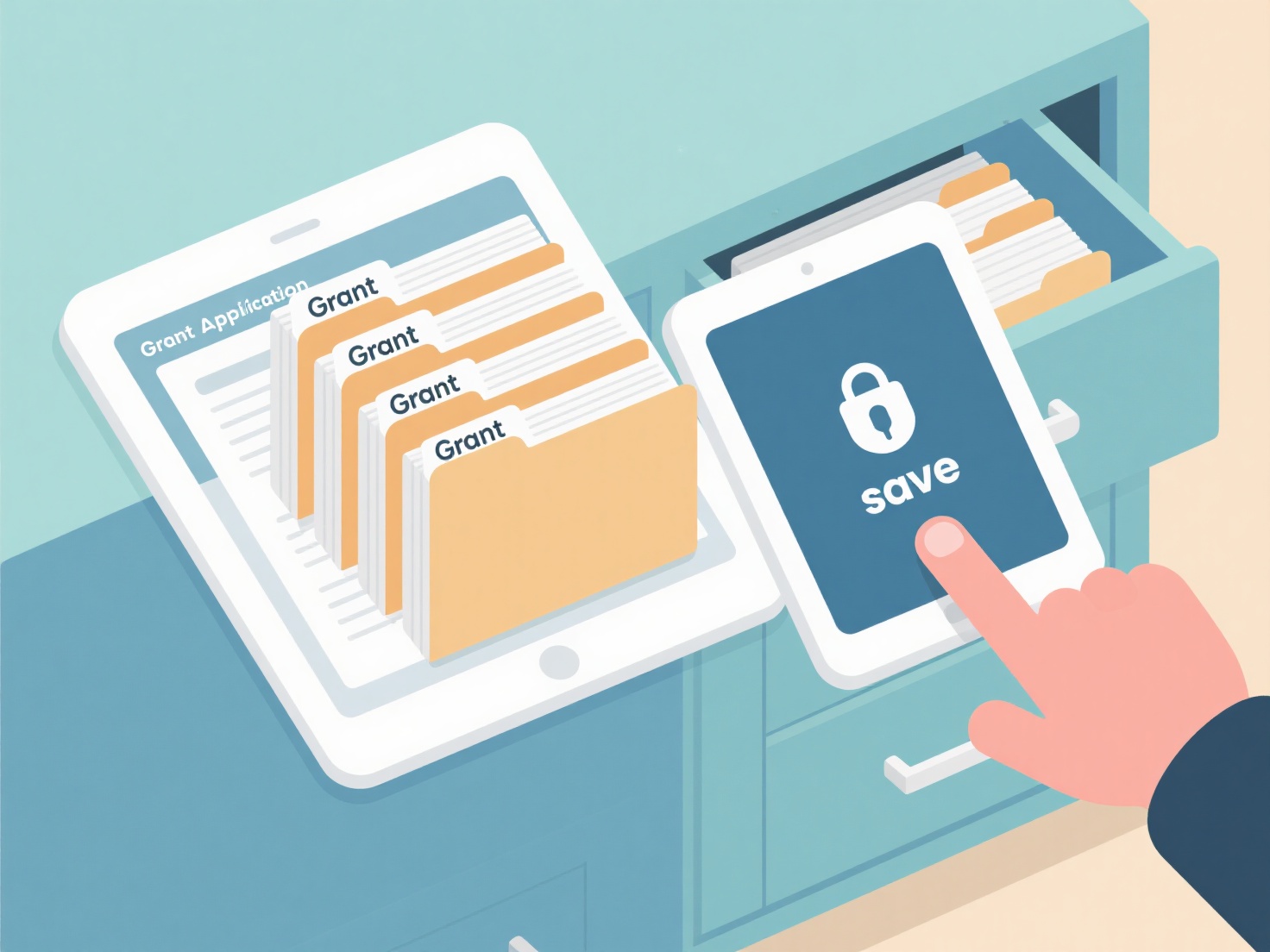
To keep grant applications organized, you should create a centralized digital tracking system that stores your submission documents, deadlines, reusable texts, and research materials in one accessible location.
Managing multiple funding opportunities can quickly become overwhelming for early-career researchers. Implementing a reliable system to track and store your grant proposals not only saves time but also reduces the stress of looming deadlines. Here is how to build an effective grant management workflow.
1. Set Up a Master Grant Tracker
Use a spreadsheet or a project management tool to monitor your funding pipeline. Your master tracker should act as your command center. Include columns for the funding agency, grant name, internal institutional deadlines, external submission deadlines, a checklist of required documents, and the current status (e.g., drafting, submitted, under review, rejected, or funded).
2. Build a Boilerplate Repository
Many grant proposals require the exact same standard information. Create a dedicated master folder for reusable "boilerplate" documents. This repository should include your continually updated CV, formatted biosketches, institutional data, descriptions of lab facilities and equipment, and standard budget justifications. Keeping these in one central place prevents you from hunting down past applications to copy and paste potentially outdated information.
3. Organize Your Supporting Literature
A strong grant application is built on a compelling literature review and a clear research gap, which means you need a pristine system for your references. Instead of scattering PDFs across your desktop, you can use WisPaper's My Library to organize your reference materials and even chat with your uploaded papers via AI to quickly extract the exact data points or methodologies you need to justify your proposal. Keeping your citations organized from the start prevents last-minute formatting panics before submission.
4. Standardize Your Folder Structure
For every new grant application, use a consistent naming convention and folder hierarchy. A standard format like Year_Funder_ProjectName (e.g., 2024_NSF_MachineLearning) works best. Inside this main folder, create specific subfolders for Drafts, Budgets, Administrative Documents, and Final Submission. Once the grant is submitted, always save a final, merged PDF of exactly what was sent to the funding agency so you have a perfect historical record.
5. Archive and Review Past Submissions
Never delete an unsuccessful grant application. Reviewer summary statements and feedback from rejected proposals are incredibly valuable for your next attempt. Archive all past grants—both winners and losers—so you can recycle strong arguments, refine weak methodologies, and learn from past critiques to improve your success rate in future funding cycles.