

How to Extract Methods from Research Papers Consistently
Extracting methods consistently means turning a stack of papers into one comparable record: the same fields, the same definitions, and the same decision rules applied to every study. The reliable way to get there is to t

How to Find a Paper from an Incomplete Citation
You have a fragment: an author surname, half a title, a year that may belong to the preprint rather than the published version, or a venue abbreviation you can't expand. The task is not to guess the paper — it is to reco

How to Find a Research Gap in a Literature Review
A research gap is not a hole you stumble into at the end of reading. It is a claim you build: that a specific question, population, method, or comparison has not yet been adequately addressed, and that you can say so wit

How to Find Synonyms and Subject Headings for a Database Search
A database search fails quietly. You type the words you already use for your topic, get a thin list of results, and assume the literature is thin. Usually the problem is vocabulary: your field calls the concept one thing

How to Find the Published Version of a Preprint
You cited a preprint in your draft, and now you need the version of record — the published article — before your supervisor, reviewer, or course instructor sees the reference list. Finding it is a matching problem, not a

How to Integrate Citations into a Paragraph Naturally
A citation belongs to a sentence the way a hinge belongs to a door: it should carry the weight of the claim without announcing itself. If you are finishing a course paper, a thesis chapter, or a first manuscript, the pra

How to Judge the Strength of Evidence Behind a Claim
A claim is only as strong as the trail that connects it to a verifiable source. When you are revising a manuscript, closing a project, handing off a lab notebook, or starting a new review, the practical question is not "

How to Know When to Stop Searching the Literature
You stop searching when the next query is unlikely to change a decision you have already documented. That is the practical answer, and it is deliberately about decisions rather than feelings. Literature searching has no
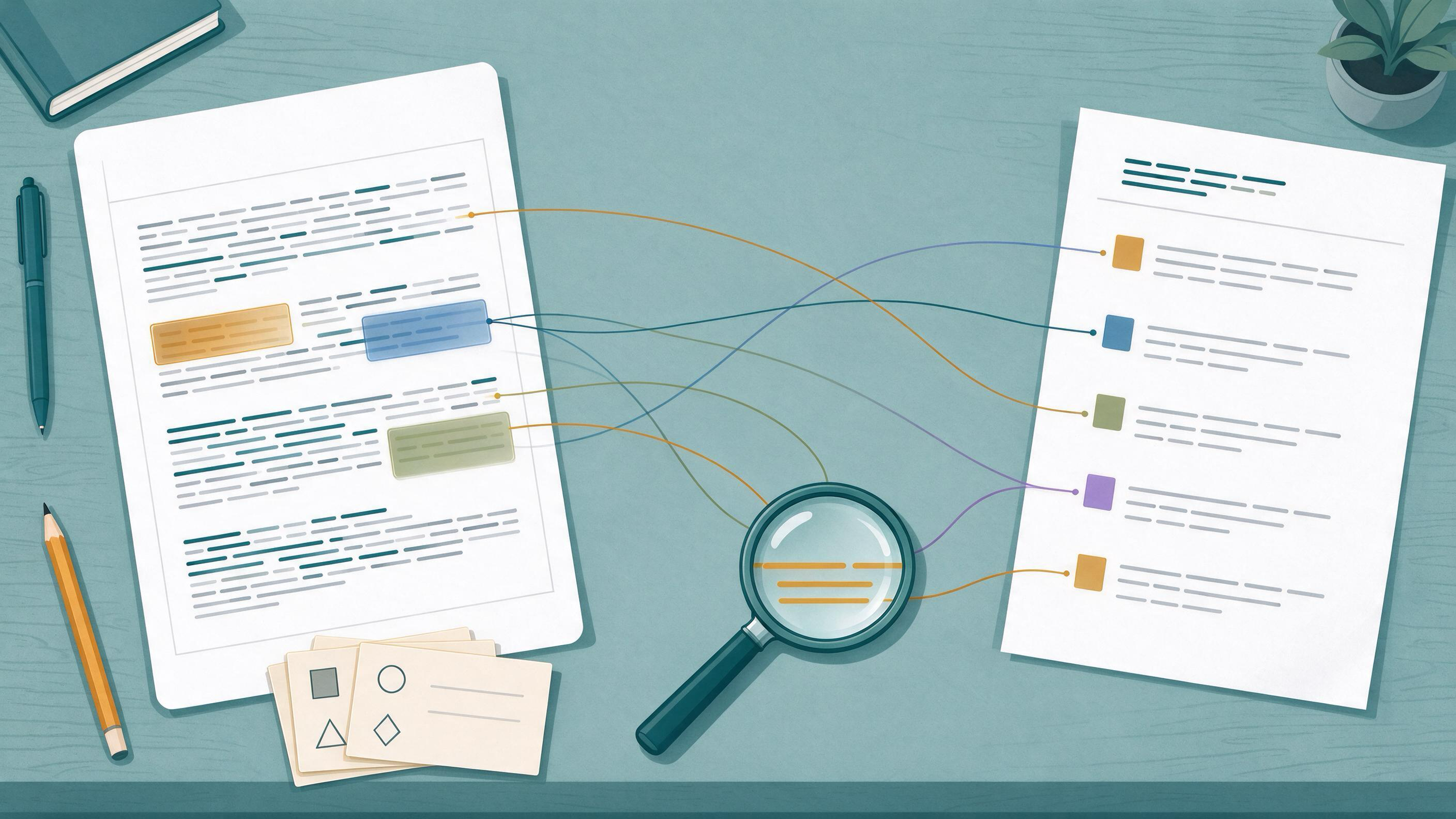
How to Match Every In-Text Citation to the Reference List
A citation-to-reference match is a one-to-one reconciliation: every in-text citation points to exactly one reference-list entry, and every reference-list entry is cited at least once. When that reconciliation is complete

How to Narrow 100 Papers to the 20 You Actually Need
A hundred papers feels like progress until you have to defend a shortlist in front of a client, a decision committee, or the team picking up your work next quarter. The real task is not "read faster." It is deciding, in