

AI disclosure is now part of manuscript preparation. If generative AI helped you draft text, revise language, screen literature, extract data, create images, edit references, or check citations, the target journal may expect a clear statement explaining what happened.
The safest approach is not to hide behind a vague sentence like "AI was used." A useful disclosure names the tool, explains the task, identifies where it affected the manuscript, and states what the authors checked. That is the difference between transparency and a confession written in fog.
This article gives practical templates for disclosing AI use in a manuscript. It focuses on literature review and research-writing workflows, where AI may help with search, screening, summarization, writing support, or citation checking. If you are still deciding whether your use crosses an academic integrity line, read is using AI for a literature review cheating first.
The Short Rule
Disclose AI use when it contributed to manuscript content, analysis, interpretation, source handling, images, figures, tables, code, or reference work in a way the journal asks authors to report.
Basic spelling and grammar tools are sometimes exempt, but that depends on the publisher and journal. The moment a tool generates or rewrites substantive text, suggests interpretation, processes research data, screens sources, extracts evidence, creates figures, or edits references, disclosure becomes much more likely.
Before submission, check three places:
- The journal's instructions for authors.
- The publisher's AI or publication ethics policy.
- The submission system fields, because some journals ask for AI use there even when the manuscript also includes a statement.
If those sources conflict, follow the strictest relevant instruction or ask the editorial office. Do not rely on a generic template when the target journal gives specific wording.
What Publishers Are Asking Authors To Disclose
Publisher language differs, but the pattern is consistent: authors remain responsible for the work, AI cannot be an author, and relevant AI use should be disclosed.
Elsevier says authors should disclose AI tools used for manuscript preparation in a separate AI declaration statement and document the tool name, purpose, and author oversight in the manuscript. Elsevier's writing guidance also gives a statement title for generative AI and AI-assisted technologies used in the writing process above the references or bibliography.
IEEE says AI-generated content in an article should be disclosed in the acknowledgments, with the AI system identified, the affected sections named, and the level of use explained for submitted IEEE publications. ICMJE says journals should require authors to disclose whether they used AI-assisted technologies in submitted work and describe the use in the cover letter and submitted work where appropriate under its AI recommendations.
Springer Nature's editorial policies state that AI is not attributed authorship and include specific limits around generative AI images and peer review confidentiality in its publisher policies. Wiley requires disclosure when AI is used to generate substantial text or restructure arguments in author guidance. SAGE says some GenAI uses in research publishing require disclosure in the methods or acknowledgments under its artificial intelligence policy.
JAMA Network instructions say authors are responsible for the accuracy of submitted content and must review AI-generated content; they also describe possible consequences for incomplete or missing AI disclosure in author instructions. COPE's position is broader: AI tools cannot meet authorship requirements because they cannot take responsibility for submitted work under publication ethics guidance.
The shared message is clear. AI use is not automatically forbidden, but it must not hide who is accountable.
What To Include In An AI Disclosure Statement
A good disclosure statement answers the questions an editor, reviewer, or reader would reasonably ask:
| Disclosure element | What to write |
|---|---|
| Tool name | Name the AI system or platform used. |
| Task | Explain whether it helped with writing, editing, search, screening, extraction, analysis, image creation, code, or citation checking. |
| Manuscript location | Identify the affected section, such as abstract, methods, literature review, tables, references, or language editing across the manuscript. |
| Extent of use | Say whether the tool generated draft text, suggested revisions, summarized papers, extracted fields, checked references, or only assisted with planning. |
| Human review | State that the authors reviewed, edited, verified, and take responsibility for the final content. |
| Source verification | For literature reviews, state that citations and extracted claims were checked against original sources. |
Avoid empty wording. "AI was used in preparing this manuscript" is too vague. It does not say what the tool did, where it affected the paper, or what the authors checked.
Use direct language. A disclosure is not a marketing paragraph and not an apology. It is a methods-like note about how the manuscript was prepared.
Where The AI Disclosure Goes
There is no single universal location. The right place depends on the journal.
Common locations include:
- A dedicated AI declaration section before the references.
- The acknowledgments section.
- The methods section.
- The cover letter.
- A submission-system question or checkbox.
- A figure caption or table note when AI helped create or alter visual material.
Elsevier commonly points authors to a declaration before the references or bibliography for writing-process use. IEEE points to acknowledgments for AI-generated content. ICMJE says the cover letter and submitted work should describe the use where appropriate. JAMA Network gives journal-specific author instructions, so medical authors should read the target journal page instead of copying a general template.
The operational rule is simple: put the disclosure where the journal asks for it. If the journal asks in more than one place, disclose in more than one place. Duplicate transparency is less risky than a missing statement.
Template For Language Editing
Use this when AI helped revise grammar, clarity, wording, or readability, but did not generate research claims, choose evidence, or change analysis.
During manuscript preparation, the authors used [tool name] for language editing and clarity suggestions. The authors reviewed and revised all AI-assisted suggestions and take full responsibility for the final content.
Use this template only if it is accurate. If the tool rewrote whole sections, added citations, changed interpretation, or generated new paragraphs, call it writing assistance rather than simple language editing.
Some journals may not require disclosure for basic spelling or grammar checks. Still, if the tool generated substantial revisions, disclose it. The cost of a clear sentence is small compared with the cost of an avoidable editorial query.
Template For Literature Search And Screening
Use this when AI helped with search terms, first-pass paper discovery, title and abstract triage, or screening support, while humans made the final decisions.
During manuscript preparation, the authors used [tool name] to assist with literature search planning and first-pass screening. The authors reviewed all retrieved records, made the final inclusion and exclusion decisions, and verified all cited sources against the original publications.
This template is useful for narrative reviews, scoping work, and early-stage evidence synthesis. It should not be used to imply that AI made inclusion decisions on its own.
If the manuscript includes a formal systematic review, rapid review, or scoping review, the disclosure may need to be more detailed in the methods section. Describe the AI role in the search and screening process, then keep enough records to show what humans checked. The workflow in AI-assisted systematic review methods can help keep search, screening, and reading separate.
Template For Paper Summaries And Literature Review Drafting
Use this when AI summarized papers, suggested thematic groupings, or helped outline a literature review section.
During manuscript preparation, the authors used [tool name] to assist with organizing notes and drafting preliminary summaries of selected literature. The authors checked all summaries against the original papers, revised the synthesis, and take responsibility for the final interpretation and wording.
This is a higher-risk use than grammar editing. The statement should make clear that the final synthesis belongs to the authors, not to the tool.
Do not use this template if you did not read the papers yourself. A disclosure does not rescue a literature review built from unchecked summaries. If AI helped you organize papers, use the process in organizing papers into themes so the final categories come from the evidence, not from a tidy but unverified output.
Template For Data Extraction
Use this when AI helped extract study characteristics, methods, sample details, outcomes, limitations, or other fields from papers.
The authors used [tool name] to assist with preliminary extraction of study characteristics from included papers. All extracted fields used in the manuscript were checked against the original publications by the authors before analysis and reporting.
This statement should sit near the methods if extraction affects the study results. If extraction was used only for informal reading notes, the acknowledgment or AI declaration may be enough, depending on journal rules.
Be precise about what was extracted. Methods, outcome measures, participant characteristics, limitations, and statistical results carry different risks. The more the extracted data affects claims in the manuscript, the more explicit the methods note should be.
For a practical workflow, pair this statement with a source-traceable extraction table. The guide on extracting data from research papers explains how to keep extracted claims tied to the original papers.
Template For Citation Checking
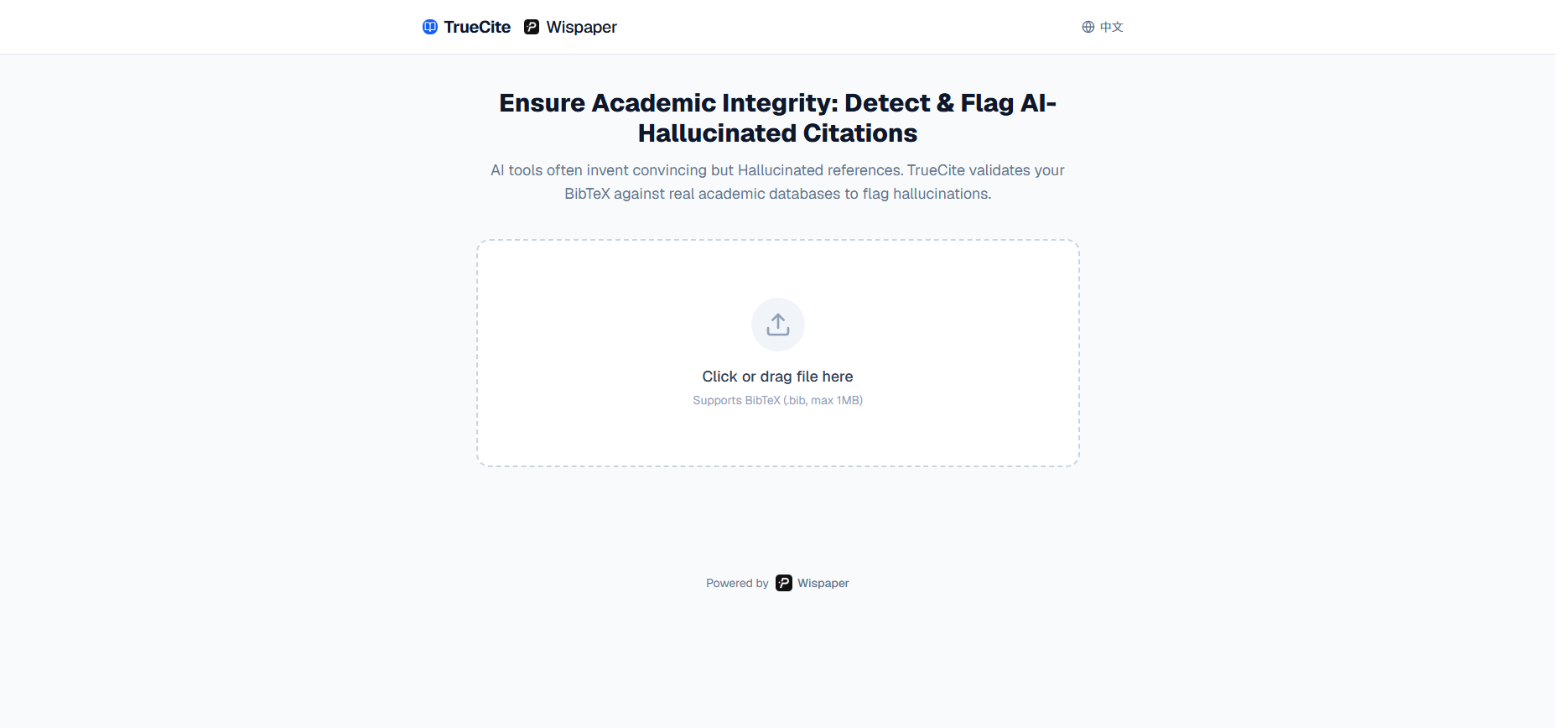
Use this when AI helped flag suspicious references, check BibTeX files, compare metadata, or identify citation fields that needed human review.
During manuscript preparation, the authors used [tool name] to assist with reference checking. The authors manually verified the cited sources, including source existence, bibliographic metadata, and relevance to the claims cited in the manuscript.
This template is safer than saying the tool "validated" or "guaranteed" the references. The disclosure should emphasize human verification.
Citation checking matters because AI-generated or AI-assisted bibliographies can contain invented or mismatched sources. The research summarized in AI citation hallucination rates shows why reference work deserves its own review step.
Template For AI-Assisted Code Or Analysis
Use this when AI helped write code, debug scripts, generate analysis ideas, or transform data-processing logic.
The authors used [tool name] to assist with drafting and debugging analysis code. The authors reviewed the code, tested outputs against expected results, and take responsibility for the final analysis.
If AI affected analysis, do not bury the disclosure in a generic writing statement. Put enough detail in the methods or supplement for another researcher to understand what was automated and what was checked.
Do not use AI to fabricate, alter, or fill missing data. That is not a disclosure issue. That is a research integrity issue.
Template For No Substantive AI Use
Some journals ask whether AI was used even when the answer is basically no. If you only used ordinary spelling or grammar tools and the journal allows that without disclosure, you may not need a statement. If the submission system asks for one anyway, use a short, factual note.
The authors did not use generative AI tools to create manuscript content, analyze data, generate citations, or produce figures. Standard spelling and grammar tools were used where permitted by the journal.
Do not include this if it is not true. If AI helped rewrite paragraphs, summarize literature, or edit references, disclose the actual use.
What Not To Say
Bad disclosure statements create more problems than they solve.
Avoid these patterns:
- "AI was used." This is too vague to be useful.
- "The manuscript was written with AI." This may raise authorship and accountability concerns unless the journal clearly permits the described use.
- "All AI output was accurate." You cannot promise that without a clear verification process.
- "AI was used, but it did not affect the work." If it did not affect anything, explain the limited role or omit it if policy allows.
- "The authors are not responsible for AI-generated errors." Authors remain responsible for the submitted manuscript.
A strong statement is narrow, factual, and accountable. It says what happened without overclaiming what the tool can do.
Pre-Submission AI Disclosure Checklist
Before submitting, run this checklist:
- Read the target journal's current AI policy.
- Check whether the publisher has a separate AI policy.
- Check whether the submission portal asks about AI use.
- Identify every AI tool used during manuscript preparation.
- Separate grammar editing from substantive content generation.
- Record whether AI affected text, tables, figures, data, code, citations, or screening.
- Verify every source and claim touched by AI.
- Put the disclosure in the journal's required location.
- Keep a private AI-use log in case the editor asks for clarification.
This is not busywork. It makes the manuscript easier to defend. If an editor asks how AI was used, you can answer calmly and specifically.
If the manuscript includes AI-assisted literature review work, run the citation process in how to verify AI-generated citations before submission. A disclosure tells readers what tools were used; it does not replace source verification.
Where WisPaper Fits
WisPaper helps researchers search and screen academic papers with AI. Its search workspace supports Deep Search, Scholar Agent, and Inspiration Discovery, while paper cards show source labels, summaries, and preview images so users can triage results before deciding what to read.
WisPaper also lets users build a paper library and ask questions against that library. Papers can be uploaded or added from search results, then used as the basis for library-specific QA.
FAQs
Keep Reading

Scholarly Sources for Assignments: Where to Find Them and How to Use Them
You have an assignment due, and the instructions say "use scholarly sources." That usually means peer-reviewed journal articles, academic books, or conference papers. But if you have ever typed your research question int
How to Find Peer-Reviewed Articles for a Research Paper
Your instructor wrote "peer-reviewed sources only" in the rubric. You need to find them, but you are not entirely sure what counts as peer reviewed or where to look. A quick Google Scholar search returns a mix of PDFs, p

Good Sources for a College Research Paper: What Counts and What Does Not
You have a thesis, a deadline, and a blank page. The next step is finding sources, but the search results are overwhelming, and it is hard to tell what your professor will actually accept. A "good" source has to be accur