

Using AI for a literature review is not automatically cheating. The line depends on who is setting the rules, what the AI does, whether the work is being assessed or published, and whether you are transparent when disclosure is required.
The safest distinction is simple: AI can support the research process, but it should not replace your judgment, reading, source verification, or authorship. Asking for search terms is different from submitting AI-written analysis. Using a tool to organize candidate papers is different from pretending you personally read sources you never opened.
This matters because literature reviews sit between research and writing. They require search strategy, inclusion judgment, synthesis, and citation accuracy. AI can help with parts of that workflow, but the final intellectual responsibility stays with the researcher. If you are using AI in a manuscript, the disclosure rules in how to disclose AI use to a journal are the next thing to check.
The Short Answer
Using AI is usually not cheating when it is allowed, disclosed when required, and used as research support. It becomes academic misconduct risk when it is prohibited, hidden, or used to replace work you are expected to do yourself.
Low-risk uses often include:
- Brainstorming search terms before you search real databases.
- Translating unfamiliar terminology into plain language for your own learning.
- Creating a checklist for screening papers against your criteria.
- Suggesting ways to group papers into themes.
- Helping edit grammar or clarity when policy allows it.
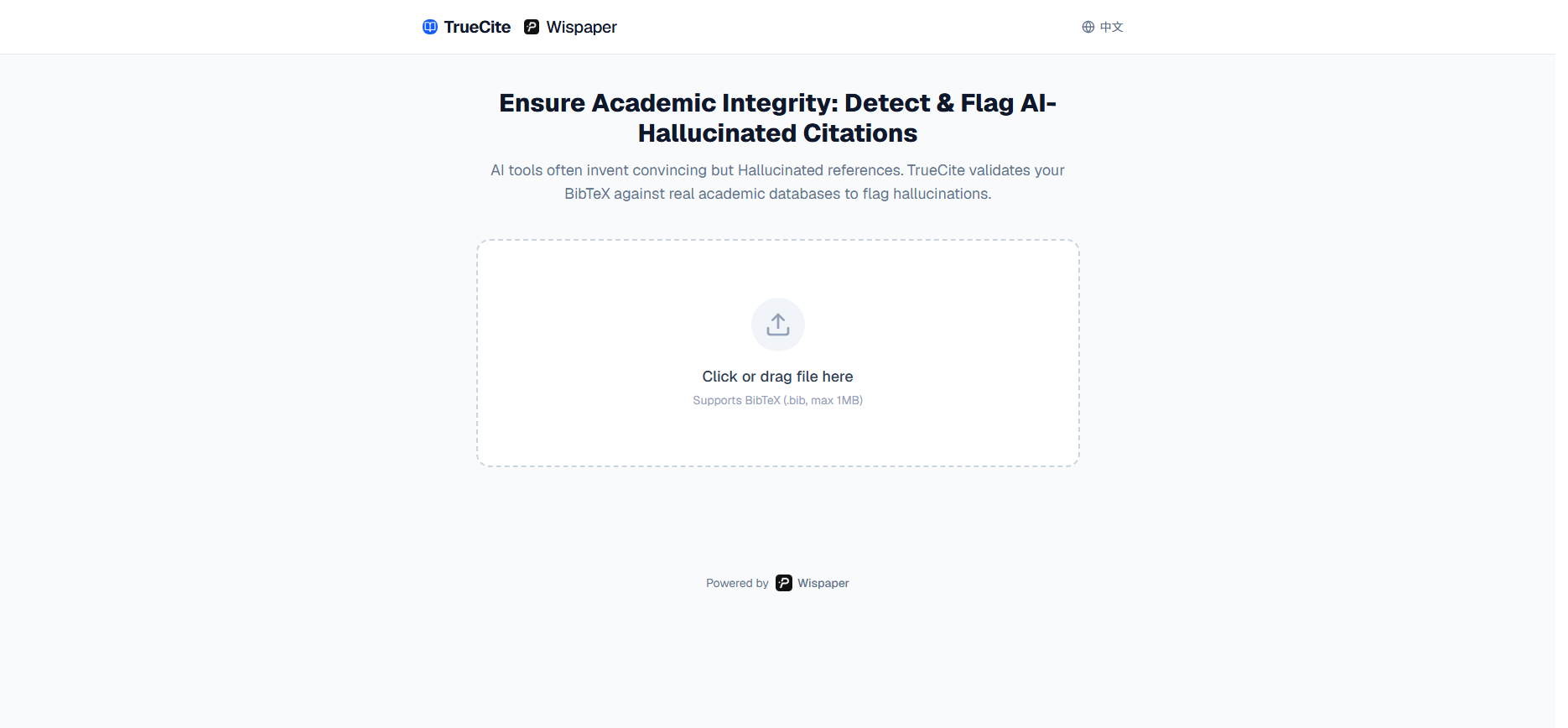
- Checking whether references are real before you cite them.
High-risk uses often include:
- Submitting AI-written literature review prose as your own analysis.
- Asking AI to invent citations or fill a bibliography.
- Relying on summaries of papers you never verify.
- Letting AI make inclusion decisions you cannot defend.
- Using AI when an instructor, department, supervisor, or journal has prohibited that use.
- Hiding AI use when disclosure is required.
The practical test is accountability. If a supervisor, instructor, reviewer, or coauthor asks why a paper was included, why a claim is cited, or how a paragraph was developed, you need to answer from your own process.
Why The Rules Feel Confusing
AI policy is confusing because different settings define the problem differently. A journal may allow generative AI for language editing with disclosure. A course may prohibit AI for assessed writing. A supervisor may allow AI for search planning but not for drafting. A lab may permit AI-assisted coding but require documentation for any text generation.
That means there is no universal answer to the question. The same AI use can be allowed in one context and misconduct in another.
The pattern across many policies is easier to understand:
- Humans must remain responsible for the work.
- AI tools cannot be credited as authors.
- AI-generated or AI-assisted writing often needs disclosure.
- Course and assessment rules can be stricter than general university guidance.
- Generated references and claims need verification before use.
COPE states that AI tools cannot meet authorship requirements because they cannot take responsibility for submitted work, manage conflicts of interest, or handle copyright and license agreements under publication ethics rules. That logic applies beyond authorship. If the tool cannot be accountable, the person using it must be.
The Acceptable-Use Spectrum
Think of AI use in a literature review as a spectrum rather than a switch. Some uses help you learn and organize. Other uses quietly move the core academic work out of your hands.
| AI use | Risk level | Why it matters |
|---|---|---|
| Search-term brainstorming | Low | You still run the search and judge the results. |
| Explaining unfamiliar concepts | Low | It supports learning, but you should verify technical details. |
| Finding candidate papers | Low to medium | The tool may miss sources or surface irrelevant work. |
| Paper screening support | Medium | You need criteria, notes, and final human decisions. |
| Theme organization | Medium | AI can suggest categories, but you must decide the argument. |
| Paper summarization | Medium to high | Summaries can distort methods, findings, and limitations. |
| Drafting literature review prose | High | This may cross authorship, assessment, or disclosure boundaries. |
| Generating citations | Very high | Fabricated or unsupported references can become misconduct. |
This spectrum is useful because it separates workflow support from intellectual substitution. A student who uses AI to find search terms is still doing the review. A student who submits AI-written synthesis without permission may not be.
If you are unsure where your use sits, write down what the AI did. If the description sounds like "it helped me plan, find, organize, or check," the use is usually easier to defend. If it sounds like "it wrote the argument, selected the evidence, or supplied citations," the risk rises quickly.
Coursework: Follow The Assignment Rule First
For students, the assignment rule comes first. General internet advice does not override a syllabus, instructor instruction, department rule, or assessment policy.
Harvard Graduate School of Education tells students that if they are unsure whether a specific use of generative AI is permitted, they are responsible for discussing it with the instructor before using it. Oxford's student guidance is stricter for assessed work: AI use is unauthorized unless students are specifically told otherwise in writing before the assessment by the relevant faculty or department.
Princeton's guidance makes another useful distinction. If generative AI is permitted for tasks such as brainstorming or outlining, students should disclose its use rather than cite it as a source, because AI output is not produced by a person in the way a source is.
Carnegie Mellon's teaching guidance shows why students cannot assume one default rule. It provides sample course policies ranging from no generative AI use to permitted use with conditions, depending on course goals and instructor design.
The student-safe rule is plain: if the assignment does not clearly allow the use, ask first. Do not wait until after submission to explain that AI was involved.
Manuscripts: Disclosure And Accountability Matter
For journal manuscripts, the question is usually less "Is AI cheating?" and more "Was AI used in a way the journal allows, and was that use disclosed?"
Elsevier says authors who use generative AI or AI-assisted tools in the writing process must add a disclosure statement before the references or bibliography, and it also notes that using AI to select, collate, generate, or edit references should be noted in the methods section or declaration as applicable.
Springer Nature's editorial policies say AI is not attributed authorship, and the policy page also notes restrictions around generative AI images and reviewer use of generative AI tools in publication workflows. IEEE guidance says AI-generated text in an article should be disclosed in the acknowledgments section, with identification of the AI system and where it was used in the article.
These policies differ in details, but the shared principle is accountability. A researcher can use permitted tools, but the named authors remain responsible for accuracy, originality, disclosure, and source integrity.
For literature reviews, that means AI cannot be the hidden author of the synthesis. It also cannot be the hidden source of citations. If AI influenced the writing, source selection, reference editing, or analysis, check the target journal's exact disclosure rule.
Search Support Is Usually Safer Than Writing Support
AI use is easier to defend when it helps before the claim is written. Search planning, keyword expansion, and paper triage are support tasks. They do not by themselves decide what your review argues.
For example, you can ask AI:
- What related terms might describe this concept in another field?
- What inclusion criteria would make this question more precise?
- What paper metadata should I record while screening?
- How might these papers be grouped by method or population?
- What citation checks should I run before submitting?
Those prompts keep you in control. You still search real sources, read papers, screen against criteria, and write the argument. A guide to free AI tools for literature review students can help separate search, mapping, screening, reading, and reference management so one tool does not quietly take over the whole workflow.
The risky prompt is "write my literature review." That prompt asks the model to produce the final academic work, including synthesis, emphasis, and sometimes citations. If that output becomes your submitted work without permission and disclosure, the risk is obvious.
Citation Risk Is The Bright Red Line
Unchecked citations are where AI use can move from sloppy to serious. A fake citation is not a style problem. It is false evidence.
AI-generated references can fail in several ways: the paper may not exist, the DOI may point elsewhere, the authors may be wrong, or the source may not support the claim. Recent work on AI citation hallucination rates shows why generated bibliographies should be treated as unverified until checked.
A safer workflow looks like this:
- Use AI to suggest search terms, not final references.
- Search scholarly databases or publisher pages yourself.
- Save source records in a reference manager.
- Read the relevant section before citing the paper.
- Check title, DOI, authors, year, and venue.
- Remove any source you cannot verify.
If you do use AI-generated references during early drafting, quarantine them. Mark them as unverified, check them before use, and rebuild the final citation from a trusted source record. The workflow in how to verify AI-generated citations is designed for exactly this step.
Literature Review Work You Should Not Outsource
A literature review is not only a list of paper summaries. It is an argument about what a field has found, how findings differ, where methods conflict, and what gap remains.
Do not outsource these decisions:
- Choosing the final scope of the review.
- Deciding which papers count as relevant.
- Interpreting whether evidence supports a claim.
- Weighing conflicting findings.
- Identifying limitations in the literature.
- Writing the final synthesis in your own reasoning.
AI can help you see possible categories, but you decide whether those categories are meaningful. AI can summarize a paper, but you check the paper. AI can suggest a gap, but you decide whether the gap is real after reading the literature.
This distinction matters when you organize papers into themes. A model can propose labels, but the review's credibility depends on whether those labels reflect the papers, not whether they sound tidy.
Disclosure: What To Record
Disclosure is easier when you keep notes while working. If you wait until the end, you may forget which tool helped with which task.
Keep a short AI-use log with:
| What to record | Example |
|---|---|
| Tool name | The system or research assistant used. |
| Purpose | Search-term brainstorming, outline critique, grammar editing, citation checking, or theme suggestions. |
| Input type | Your research question, draft paragraph, candidate paper list, or BibTeX file. |
| Output used | Search terms, checklist, edited wording, or rejected suggestions. |
| Human check | What you verified before using the output. |
| Disclosure need | Whether the course, supervisor, or journal requires a statement. |
This log is not only defensive. It helps you keep the workflow clean. If AI helped with grammar, the final research claims still need source checks. If AI helped with source discovery, the final bibliography still needs metadata verification.
For a journal article, adapt the disclosure to the publisher's rules. For coursework, use the instructor's preferred format. For thesis or dissertation work, ask the department before you submit rather than after a reviewer raises the question.
Practical Examples
Some examples make the boundary clearer.
Usually acceptable when allowed:
- You ask AI for synonyms and database search terms, then run the searches yourself.
- You ask AI to turn your inclusion criteria into a screening checklist, then make final decisions.
- You ask AI to explain a statistical term, then verify it in a textbook or methods paper.
- You ask AI to suggest possible themes, then revise them after reading the papers.
- You ask AI to flag citation fields that need checking, then verify each source yourself.
Usually risky:
- You ask AI to write the literature review and submit the output as your own work.
- You ask AI to provide citations and do not verify them.
- You use AI where the course explicitly prohibits it.
- You hide AI use when the journal or instructor requires disclosure.
- You cite a paper because AI summarized it, without opening the paper yourself.
Context still matters. Grammar editing may be allowed in one class and restricted in another. AI-assisted outlining may be welcomed by one supervisor and disallowed for a specific assessment. The rule is not vibe-based. The rule is whatever applies to your assignment, institution, journal, or collaboration.
A Safe Workflow For Using AI In A Literature Review
Use AI at the edges of the workflow, then keep human control at the center:
| Stage | Safer AI use | Human responsibility |
|---|---|---|
| Research question | Ask for ways to narrow or clarify the topic. | Decide the final scope and terms. |
| Search planning | Generate synonyms, related terms, and database query ideas. | Run searches in real sources and document the process. |
| Screening | Convert criteria into a checklist or flag uncertain records. | Make and record inclusion decisions. |
| Reading | Ask targeted questions about a paper you have open. | Verify the answer against the paper. |
| Synthesis | Ask for possible theme structures. | Build the argument from your own reading. |
| Writing | Use permitted grammar or clarity support. | Write and own the final analysis. |
| Citation checking | Use tools to flag suspect references. | Confirm source existence, metadata, and claim support. |
This workflow lets AI reduce friction without turning it into the hidden author of the review. It also keeps your process explainable if someone asks.
If your goal is speed, do not skip verification. The guide on writing a literature review faster works best when faster writing still rests on real papers, clean notes, and verified citations.
Where WisPaper Fits
WisPaper helps researchers search and screen academic papers with AI. Its search workspace supports Deep Search, Scholar Agent, and Inspiration Discovery, while paper cards show source labels, summaries, and preview images so users can triage results before deciding what to read.
WisPaper also lets users build a paper library and ask questions against that library. Papers can be uploaded or added from search results, then used as the basis for library-specific QA.
FAQs
Keep Reading

Scholarly Sources for Assignments: Where to Find Them and How to Use Them
You have an assignment due, and the instructions say "use scholarly sources." That usually means peer-reviewed journal articles, academic books, or conference papers. But if you have ever typed your research question int
How to Find Peer-Reviewed Articles for a Research Paper
Your instructor wrote "peer-reviewed sources only" in the rubric. You need to find them, but you are not entirely sure what counts as peer reviewed or where to look. A quick Google Scholar search returns a mix of PDFs, p

Good Sources for a College Research Paper: What Counts and What Does Not
You have a thesis, a deadline, and a blank page. The next step is finding sources, but the search results are overwhelming, and it is hard to tell what your professor will actually accept. A "good" source has to be accur