

A literature review is not a chronological list of papers. It is an argument about patterns in the literature: what researchers agree on, where methods differ, which findings conflict, what limitations repeat, and what gap your work addresses.
Themes are how you move from "I read many papers" to "I understand what this field is doing." Without themes, a review becomes a paper-by-paper tour. With themes, it becomes synthesis.
Webster and Watson's well-known guidance on literature reviews argues that a review should be concept-centric rather than author-centric, because concepts should determine the organizing framework instead of a sequence of article summaries. That is the core idea behind this workflow. You are not sorting papers for storage. You are building the structure of the argument.
Why Chronological Summaries Fail
Chronological summaries are easy to write because the order is already decided. The oldest paper comes first, the newest paper comes last, and the writer avoids choosing a structure.
The problem is that chronology often hides meaning. It tells readers what happened first, not what matters. It may show the history of a topic, but it does not explain the current shape of the field.
Theme-based organization is stronger because it groups papers by intellectual function:
- Methods used to study the question.
- Populations or contexts being examined.
- Theories or mechanisms being tested.
- Findings that agree or conflict.
- Measures, datasets, or models that recur.
- Limitations that keep appearing.
- Gaps that justify the next study.
Chronology can still matter inside a theme. For example, a methods section may discuss how tools evolved over time. But chronology should serve the argument, not replace it.
Start With The Review Question
Themes should come from the review question, not from whatever labels appear first in your reference manager.
Before coding papers, write the question in one sentence. Then write what the review needs to explain. For example:
This review explains how AI-assisted title and abstract screening is evaluated in systematic review workflows.
That question suggests possible themes: evaluation methods, screening stages, human oversight, active learning, reporting, and risk of missed studies. Another question would create different themes.
Do not start with tool names, author names, or journal names unless those are central to the question. Most literature reviews need idea categories, not brand categories or source folders.
If the question still feels unstable, work on scope first. A guide to AI academic search beyond Google Scholar can help uncover the vocabulary and adjacent concepts before you start organizing papers.
Create First-Pass Codes
Coding means assigning short labels to papers, notes, or findings. These labels help you see repeated ideas across the source set.
Good first-pass codes are specific enough to be useful:
- active learning screening
- title and abstract prioritization
- non-native English detector bias
- citation hallucination
- human reviewer disagreement
- data extraction errors
- AI disclosure policy
Weak codes are too vague:
- important
- AI
- good paper
- maybe useful
- background
Vague codes feel easy in the moment, but they create work later. A tag like "important" tells you nothing about why the paper matters. A code like "human reviewer disagreement" points toward a paragraph.
Use codes generously at first. Early coding is not the final outline. It is a way to notice recurring material.
Build A Synthesis Matrix
A synthesis matrix turns papers into rows and themes into columns. It helps you compare sources instead of summarizing them one by one.
Writing centers often teach synthesis matrices because they force comparison. Florida International University's writing center describes a synthesis matrix as a chart that helps researchers sort and categorize arguments on an issue for literature review organization. Johns Hopkins Libraries says a synthesis matrix helps record main points from each source and document how sources relate to each other during synthesis.
A useful matrix can include:
| Column | What it captures |
|---|---|
| Citation | The paper or source record. |
| Research question | What the paper tries to answer. |
| Method | How the study approached the question. |
| Data or sample | What evidence the paper uses. |
| Main finding | What the paper contributes. |
| Limitation | What weakens or narrows the finding. |
| Theme | Which part of your review it supports. |
| Use in my review | Why this paper matters to your argument. |
The final column is often the most valuable. It forces you to connect each paper to your own review rather than letting the paper sit as a standalone summary.
If your matrix includes methods, outcomes, limitations, and evidence notes, it can also become the starting point for extracting data from research papers. The difference is purpose: a synthesis matrix helps you write an argument, while an extraction table preserves fields that must be checked against the source.
Sort Themes By Function
Not all themes do the same job. Some explain what the field knows. Some explain how the field studies the question. Some explain why the field is still uncertain.
Useful theme types include:
- Background themes: define the problem and key concepts.
- Method themes: compare how studies are designed.
- Evidence themes: group findings that support or challenge claims.
- Debate themes: show disagreement or competing interpretations.
- Limitation themes: identify recurring weaknesses.
- Gap themes: set up your research contribution.
A strong review usually combines several theme types. A methods-heavy review may need method themes. A theory review may need debate themes. A policy review may need evidence and limitation themes.
Do not force every paper into only one theme. A strong paper may appear in a methods discussion and later in an evidence discussion. The key is to avoid repeating the same summary. Each appearance should serve a different purpose.
Use AI As A Second Reader
AI can help cluster abstracts, suggest labels, compare notes, or identify repeated concepts. It is useful when you feel stuck looking at too many papers.
Use AI for:
- Suggesting possible clusters from abstracts or notes.
- Identifying repeated terms across a paper set.
- Comparing your codes with another possible structure.
- Turning a synthesis matrix into outline ideas.
- Asking what papers seem to disagree about.
Do not use AI for:
- Deciding the final themes without reading.
- Summarizing papers you never opened.
- Creating themes that sound tidy but do not fit the evidence.
- Adding citations you cannot verify.
- Replacing your own interpretation of the field.
The best workflow is iterative. Create your own first-pass codes. Ask AI for an alternate grouping. Compare the two. Rename, merge, or delete themes in your own language. Then check the important papers manually.
If you use AI this way for a manuscript, keep a short note about the role it played. The disclosure guide on how to disclose AI use to a journal can help decide whether it belongs in a statement.
Turn Themes Into An Outline
Themes are not the final review. They are raw material for the outline.
A useful outline usually moves from broad to specific:
- Define the problem and scope.
- Explain what the field generally agrees on.
- Compare methods or approaches.
- Discuss conflicting findings.
- Identify recurring limitations.
- Show the gap your work addresses.
Do not create one section per paper. Create one section per idea. Inside each section, compare papers.
A weak paragraph says:
Smith studied this topic. Chen studied the same topic. Patel also studied this topic.
A stronger paragraph says:
Across recent studies, the strongest disagreement concerns how relevance should be measured. Smith treats relevance as reviewer agreement, while Chen evaluates ranking efficiency and Patel focuses on missed-study risk.
The second version uses papers to explain a pattern. That is synthesis.
Once the outline is built this way, drafting becomes much easier. The process in writing a literature review faster works best when the theme structure is already clear and every section has a known set of sources.
Test Whether A Theme Is Strong Enough
A theme should earn its place. If it is too narrow, it becomes a paper summary. If it is too broad, it becomes vague.
Test each theme with these questions:
- Does this theme answer part of the review question?
- Does it include more than one source?
- Can I explain how the sources relate?
- Does it reveal agreement, disagreement, method difference, or limitation?
- Would removing the theme weaken the review?
If a theme fails these tests, merge it, rename it, or move it to background notes.
Themes should also be named in plain language. "Screening automation evaluation" is useful. "Theme A" is not. "Interesting papers" is a storage folder, not a section heading.
Keep Citation Verification Close
Theme work can create citation drift. You may move a claim from one section to another and forget which paper supports it. You may also let AI suggest a grouping that pairs a source with the wrong claim.
Before drafting, check:
- Which paper supports each claim?
- Which section of the paper supports it?
- Whether the citation is real and metadata is correct.
- Whether the paper belongs in that theme or only appears related.
- Whether any source is being overused to support too many claims.
This is why theme tables should include a "use in my review" column. It ties a paper to an argument. For citation safety, use how to verify AI-generated citations before the final draft.
Where WisPaper Fits
WisPaper helps researchers search and screen academic papers with AI. Its search workspace supports Deep Search, Scholar Agent, and Inspiration Discovery, while paper cards show source labels, summaries, and preview images so users can triage results before deciding what to read.
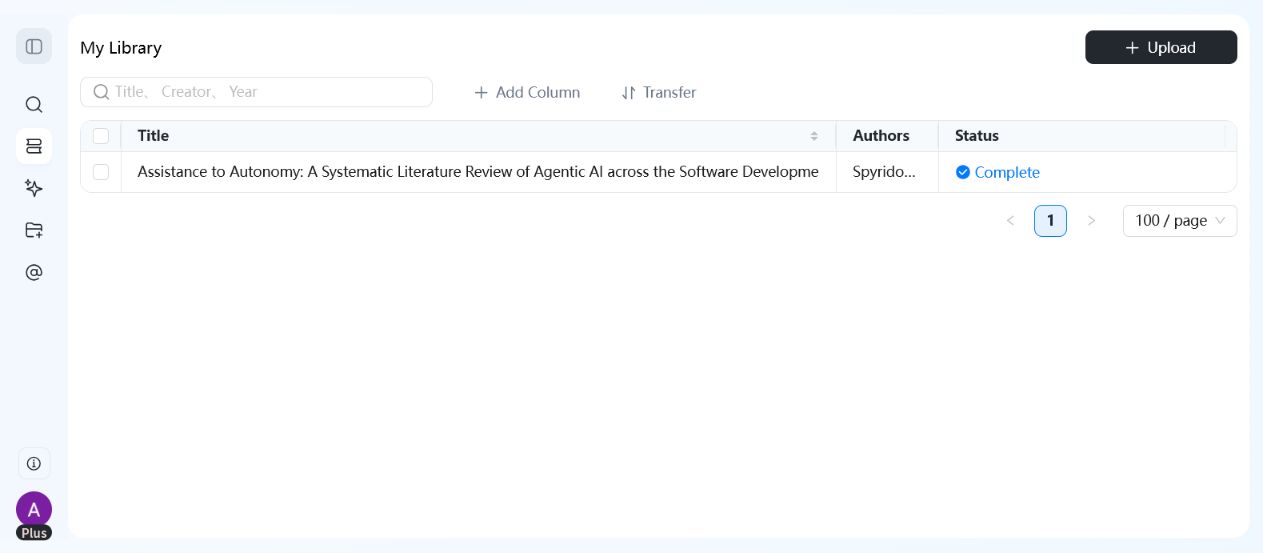
WisPaper also lets users build a paper library and ask questions against that library. Papers can be uploaded or added from search results, then used as the basis for library-specific QA.
FAQs
Keep Reading

Scholarly Sources for Assignments: Where to Find Them and How to Use Them
You have an assignment due, and the instructions say "use scholarly sources." That usually means peer-reviewed journal articles, academic books, or conference papers. But if you have ever typed your research question int

How to Find Peer-Reviewed Articles for a Research Paper
Your instructor wrote "peer-reviewed sources only" in the rubric. You need to find them, but you are not entirely sure what counts as peer reviewed or where to look. A quick Google Scholar search returns a mix of PDFs, p

Good Sources for a College Research Paper: What Counts and What Does Not
You have a thesis, a deadline, and a blank page. The next step is finding sources, but the search results are overwhelming, and it is hard to tell what your professor will actually accept. A "good" source has to be accur