

How to Trace a Claim Back to the Original Study: A Step-by-Step Evidence Workflow
A claim reaches you secondhand—a guideline summary, a review, a colleague's slide, a news brief—and you need to know what the original study actually reported. Tracing it back is a chain of small verification decisions:

How to Turn an Evidence Matrix into a Literature Review Outline
An evidence matrix is a grid of studies and the claims, methods, and findings you extracted from them. A literature review outline is the argument you will make from that grid: an ordered set of sections, each with a job

How to Update an Old Literature Search Efficiently
An old literature search is not a document to reread; it is a set of decisions you can re-run. The efficient path is to recover the original eligibility criteria and search logic, then update only the parts that changed:

How to Update References Before Manuscript Submission
Updating references before submission is a verification pass, not a formatting pass. The goal is to confirm that every cited work still exists under the identifier you used, that its bibliographic fields match the record
How to Use Backward Citation Searching to Find Key Papers
Backward citation searching means working from a paper you already trust and following its reference list into the older work it builds on. You are not searching a database by keyword; you are reading the citation trail
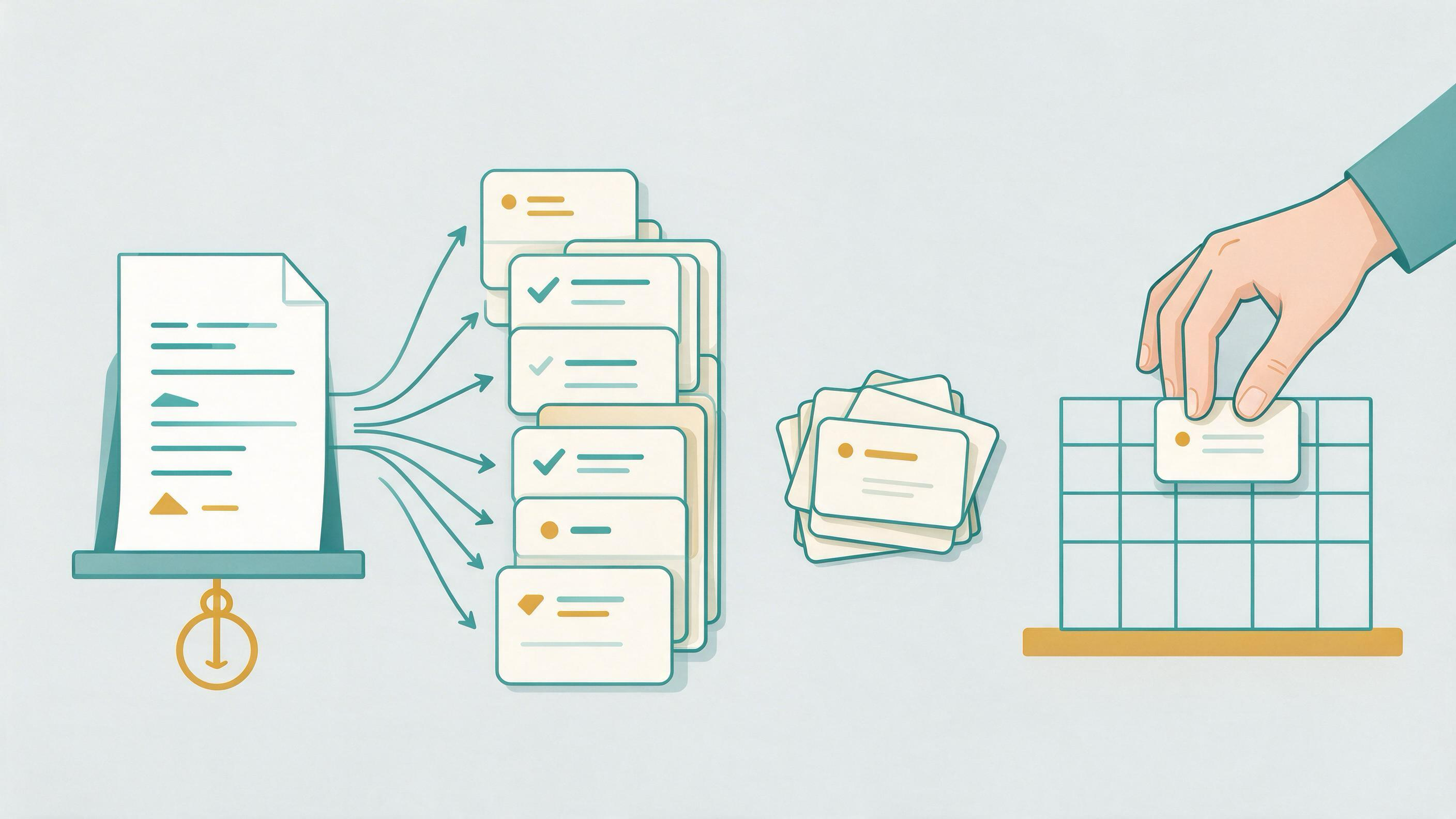
How to Use Forward Citation Searching to Update a Review
Forward citation searching answers a specific question: who has cited this paper since it was published? For a review author, that question turns a fixed reference list into a moving target. You start from the studies yo

How to Verify a Direct Quote and Its Page Number
A direct quote is only as strong as the page you can point to. When a supervisor circles a quotation and writes "source?" or "page?", the fix is not a quick reword — it is a short, repeatable verification routine that ta
How to Write a Defensible Research Gap Statement
A defensible research gap statement does more than assert that something is missing. It shows, through a documented search and screening process, that the gap is real, relevant, and reachable with the evidence and method

How to Write a Limitations Section That Matches the Evidence
A limitations section matches the evidence when every constraint you name is traceable to a decision you actually made — a search you ran, a sample you could reach, a method you chose — and when the scope you claim is no

How to Write a Literature Review in One Week: A Step-by-Step Evidence Workflow
A one-week literature review is not a compressed version of a year-long systematic review. It is a focused, defensible evidence brief: a clearly bounded question, a documented search, a transparent screening trail, and a