

Writing a literature review faster does not mean letting AI write it for you. It means removing avoidable friction: vague scope, unscreened papers, weak notes, late citation checks, and a structure that only appears after you have already drafted too much.
The fastest ethical path is upstream. Better search, screening, organization, evidence tables, and source verification make writing easier before the first paragraph is drafted. AI can help with those tasks, but it should not replace reading, interpretation, or authorship.
This guide gives a workflow for writing faster without hiding AI use or weakening the review. If you are still unsure which AI uses are acceptable, read is using AI for a literature review cheating before drafting.
Why Literature Reviews Take So Long
Most literature reviews do not slow down because the writer is lazy. They slow down because earlier stages were messy.
Common causes include:
- The research question is too broad.
- Papers are saved before they are screened.
- Notes summarize papers but do not compare them.
- Themes are created late.
- Citations are checked only after drafting.
- AI is used for prose before the source base is stable.
Writing then becomes detective work. You hunt through PDFs, rediscover why a paper mattered, move paragraphs around, and repair citations that should have been checked earlier.
The fix is not to type faster. The fix is to make the draft easier to build.
Narrow The Scope Before Searching More
When a literature review feels slow, the instinct is often to search more. That can make the problem worse. A broader paper pile does not help if the scope is still vague.
Write the review question in one sentence. Then write what is outside the review.
Example:
This review covers AI-assisted title and abstract screening in systematic reviews, not AI tools for manuscript drafting or general academic writing.
That boundary prevents the source set from expanding forever. It also helps AI tools. A narrow question gives search and screening tools a clearer target.
If you are still finding the vocabulary of the field, use AI academic search beyond Google Scholar to discover terms, seed papers, and adjacent concepts before building the final source set.
Screen Before Deep Reading
Do not deep-read every paper you find. Screening exists because not every candidate deserves full attention.
Use title and abstract screening first. Label records as include, exclude, or maybe. Save deep reading for papers that pass your criteria or sit in the maybe pile.
This prevents a common waste pattern: reading irrelevant PDFs deeply because they appeared early in search results. It also makes the later writing stage stronger. When a paper reaches your synthesis matrix, it should already have a reason to be there.
For a formal review, screening needs documentation. For a thesis or narrative review, a simpler log may be enough. Either way, record why papers stayed or left.
AI can help prioritize records, summarize abstracts, or flag likely relevance. Treat that as triage, not final judgment. If AI affects the screening process in a manuscript, disclose the role when policy requires it.
Build A Synthesis Matrix Before Drafting
A synthesis matrix is one of the best ways to make writing faster. It turns reading into structured material for paragraphs.
Florida International University's writing center describes a synthesis matrix as a chart that helps researchers sort and categorize arguments on an issue for literature review organization. Johns Hopkins Libraries says a synthesis matrix helps record the main points of each source and document how sources relate to each other during synthesis.
Useful columns include:
| Column | Purpose |
|---|---|
| Citation | Keeps the source traceable. |
| Research question | Shows what the paper tries to answer. |
| Method | Helps compare study designs. |
| Data or sample | Shows the evidence base. |
| Main finding | Captures what the paper contributes. |
| Limitation | Preserves caution for writing. |
| Theme | Places the paper in the argument. |
| Use in my review | Explains why the paper matters. |
The last column is the secret. It stops you from collecting summaries and forces you to decide how each paper will function in the review.
Write By Theme, Not By Paper
Webster and Watson's literature review guidance argues for concept-centric reviews rather than author-centric summaries as the organizing framework. That principle is what makes a review readable.
Do not write one paragraph per paper. Write one paragraph per idea.
A weak structure says:
Smith studied the topic. Chen also studied the topic. Patel studied a similar topic.
A stronger structure says:
Across the included studies, the main disagreement is how relevance should be measured. Some studies evaluate reviewer agreement, while others focus on screening efficiency or missed-study risk.
The second version is faster to write when the matrix already shows the pattern. You are not inventing the paragraph from memory. You are turning a comparison into prose.
If your paper set still feels like a pile, pause writing and use organizing papers into themes first. A clearer outline saves more time than another hour of drafting.
Use AI For Friction, Not Authority
AI can help with writing, but the safest uses are support tasks around your own notes and verified sources.
Useful AI tasks include:
- Turning a synthesis matrix row into draft bullets.
- Suggesting possible section headings from your themes.
- Checking whether a paragraph has a clear topic sentence.
- Rephrasing your own awkward sentence without adding claims.
- Asking what transition is missing between two sections.
- Identifying repeated wording or unclear structure.
Riskier AI tasks include:
- Writing a final literature review section from scratch.
- Adding citations to paragraphs.
- Summarizing papers you have not checked.
- Deciding which evidence is strongest.
- Inventing a research gap before the sources support it.
The safe rule: AI can help shape your material, but it should not become the source of the material.
If AI materially affects the manuscript text, check the policy. Elsevier says authors should disclose AI tools used for manuscript preparation in a separate AI declaration, including tool name, purpose, and author oversight in the manuscript. The practical templates in how to disclose AI use to a journal can help.
Check Citations Before The Final Draft
Late citation checking is one of the most expensive forms of rework. It forces you to revisit sentences, sources, and claims after the argument already feels finished.
Check citations while drafting:
- Does the source exist?
- Do the title, authors, year, and DOI match?
- Does the paper support the sentence?
- Is the claim too broad for the source?
- Has the paper been corrected or retracted?
This matters even more if AI helped find or format references. AI-generated references can look convincing while being fake, mixed, or attached to the wrong claim. The guide on how to verify AI-generated citations should be part of the workflow before submission.
Citation discipline also improves style. When you know exactly what a source supports, your sentences become more precise.
Draft In Passes
Do not try to write the final literature review in one pass. Drafting is faster when each pass has a job.
A practical sequence:
- Structure pass: create headings and paragraph purposes.
- Evidence pass: assign sources to each paragraph.
- Draft pass: write rough prose from the matrix.
- Synthesis pass: compare papers instead of listing them.
- Citation pass: verify sources and claim support.
- Clarity pass: tighten sentences and transitions.
- Disclosure pass: add AI-use statements if needed.
This keeps you from fixing everything at once. It also makes AI support safer. You can ask for help with a specific pass, such as clarity, without handing over the whole argument.
Know When To Stop Reading
Some writers use "more reading" to avoid drafting. More reading feels productive because it delays judgment. But at some point, the review needs a structure.
Stop adding papers when:
- New papers repeat themes already in the matrix.
- The main debates are visible.
- You can explain the core methods and limitations.
- The remaining papers are background, not central evidence.
- Your deadline requires synthesis, not endless discovery.
This does not mean the literature is complete forever. It means the current review has enough material to answer its question.
If the field is moving quickly, keep a separate update list. Do not let every new alert reopen the whole review. The workflow in keeping up with research literature can help separate active writing from ongoing monitoring.
Avoid The Biggest Rework Traps
Fast writing fails when early shortcuts create late cleanup.
Watch for these traps:
- Saving papers without a reason for using them.
- Copying AI summaries into notes without checking the paper.
- Writing section headings before the themes are clear.
- Using a source for a claim it does not actually support.
- Letting one influential paper dominate the whole review.
- Mixing background sources with core evidence.
- Moving paragraphs without moving citation checks with them.
The fix is a small amount of discipline at each stage. Give every saved paper a status. Give every source a role. Give every paragraph a purpose. Give every citation a claim it supports.
This may sound slower than drafting immediately, but it prevents the worst kind of delay: the late-stage rewrite where the prose exists, but the evidence structure underneath it is shaky.
A Cleaner AI-Assisted Writing Loop
If AI is part of the workflow, use a loop that keeps you in control:
- Start with your screened papers and synthesis matrix.
- Draft rough bullets from your own notes.
- Ask AI to identify unclear transitions or missing logic.
- Revise the paragraph yourself.
- Check citations against the original sources.
- Record any AI use that may need disclosure.
This loop keeps AI near clarity and structure, not evidence invention. It also creates a defensible process if an instructor, supervisor, coauthor, or editor asks how the review was written.
Where WisPaper Fits
WisPaper helps researchers search and screen academic papers with AI. Its search workspace supports Deep Search, Scholar Agent, and Inspiration Discovery, while paper cards show source labels, summaries, and preview images so users can triage results before deciding what to read.
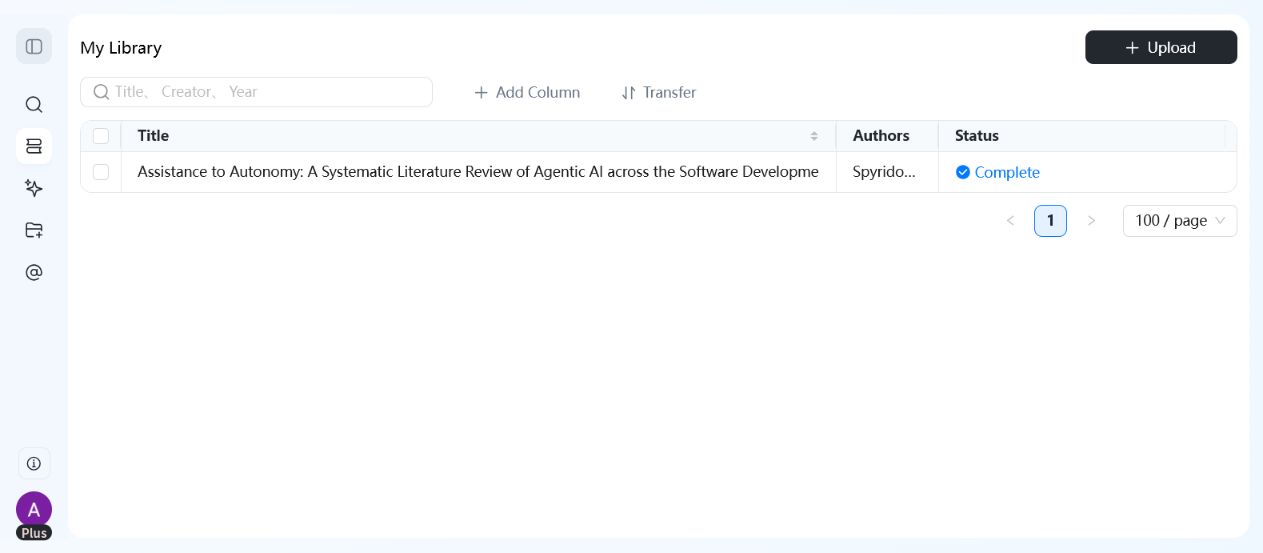
WisPaper also lets users build a paper library and ask questions against that library. Papers can be uploaded or added from search results, then used as the basis for library-specific QA.
FAQs
Keep Reading

Scholarly Sources for Assignments: Where to Find Them and How to Use Them
You have an assignment due, and the instructions say "use scholarly sources." That usually means peer-reviewed journal articles, academic books, or conference papers. But if you have ever typed your research question int
How to Find Peer-Reviewed Articles for a Research Paper
Your instructor wrote "peer-reviewed sources only" in the rubric. You need to find them, but you are not entirely sure what counts as peer reviewed or where to look. A quick Google Scholar search returns a mix of PDFs, p

Good Sources for a College Research Paper: What Counts and What Does Not
You have a thesis, a deadline, and a blank page. The next step is finding sources, but the search results are overwhelming, and it is hard to tell what your professor will actually accept. A "good" source has to be accur